The fairy-tale writer
Hans Christian Andersen.
He arrived in Copenhagen at fourteen with nothing but a belief in his own stories — and the city never let him go. Statues, doorways and even manhole covers still carry his silhouette. Here's where to meet him.
His story, in short
From Odense to the world.
Born to a shoemaker in Odense, Denmark in 1805, he came to Copenhagen at 14 to chase the theatre. The stage rejected him — so he wrote instead. In 1835 the first fairy tales appeared, and the world has never stopped reading them: The Little Mermaid, The Ugly Duckling, The Emperor's New Clothes.
He never really left the city again. He lived in three different houses on Nyhavn, walked Kongens Have almost daily, adored Tivoli — and when he died in 1875, the whole country mourned him as Digteren: The Poet.
Around the city
Meet him in the city.
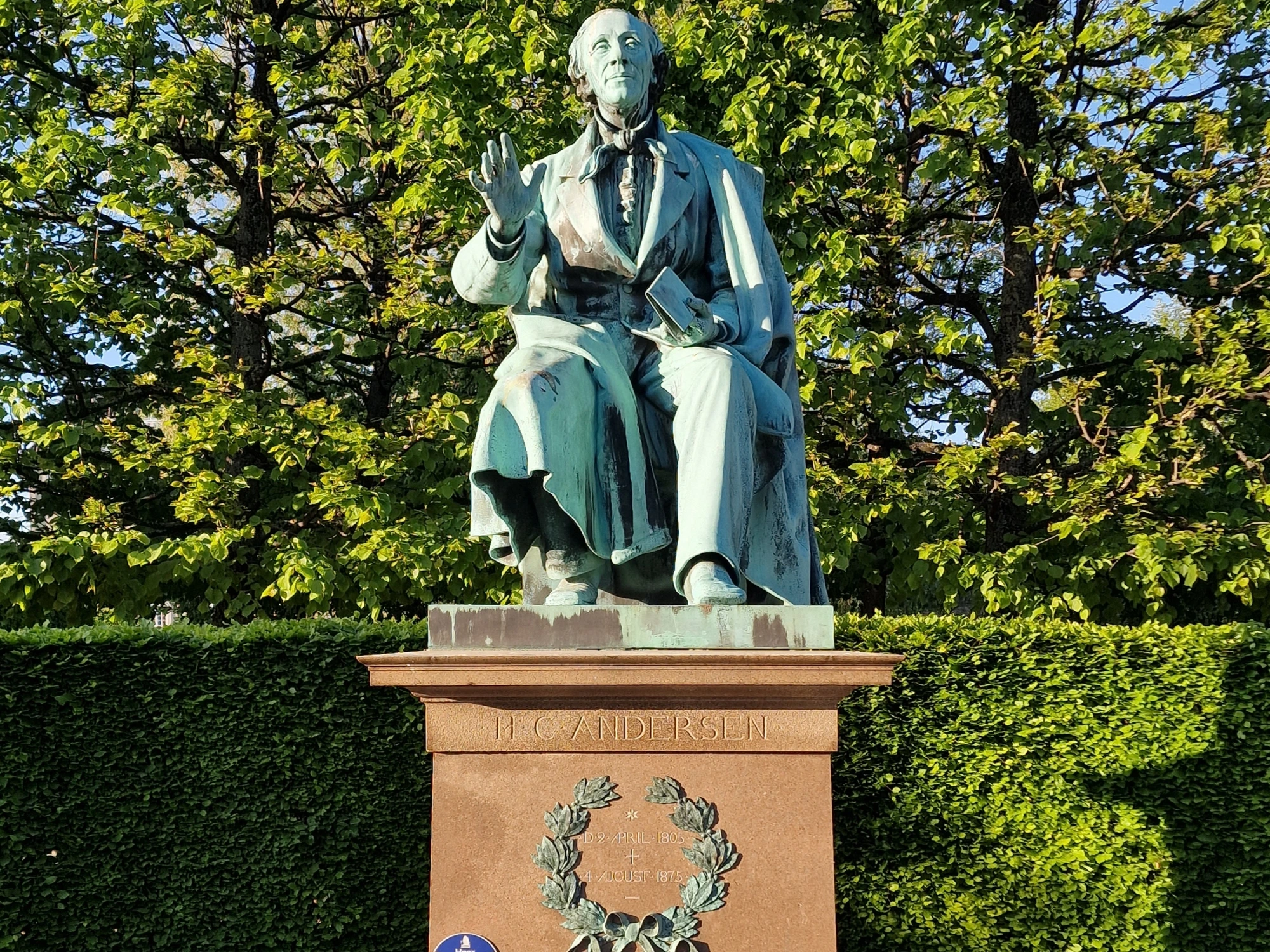
The royal oneThe statue in Kongens Have
He's sat here in bronze since 1880 — book open, hand raised, mid-story, as if hushing the King's Garden around him. Find him by Rosenborg Castle, in the park he loved to walk.
Find him here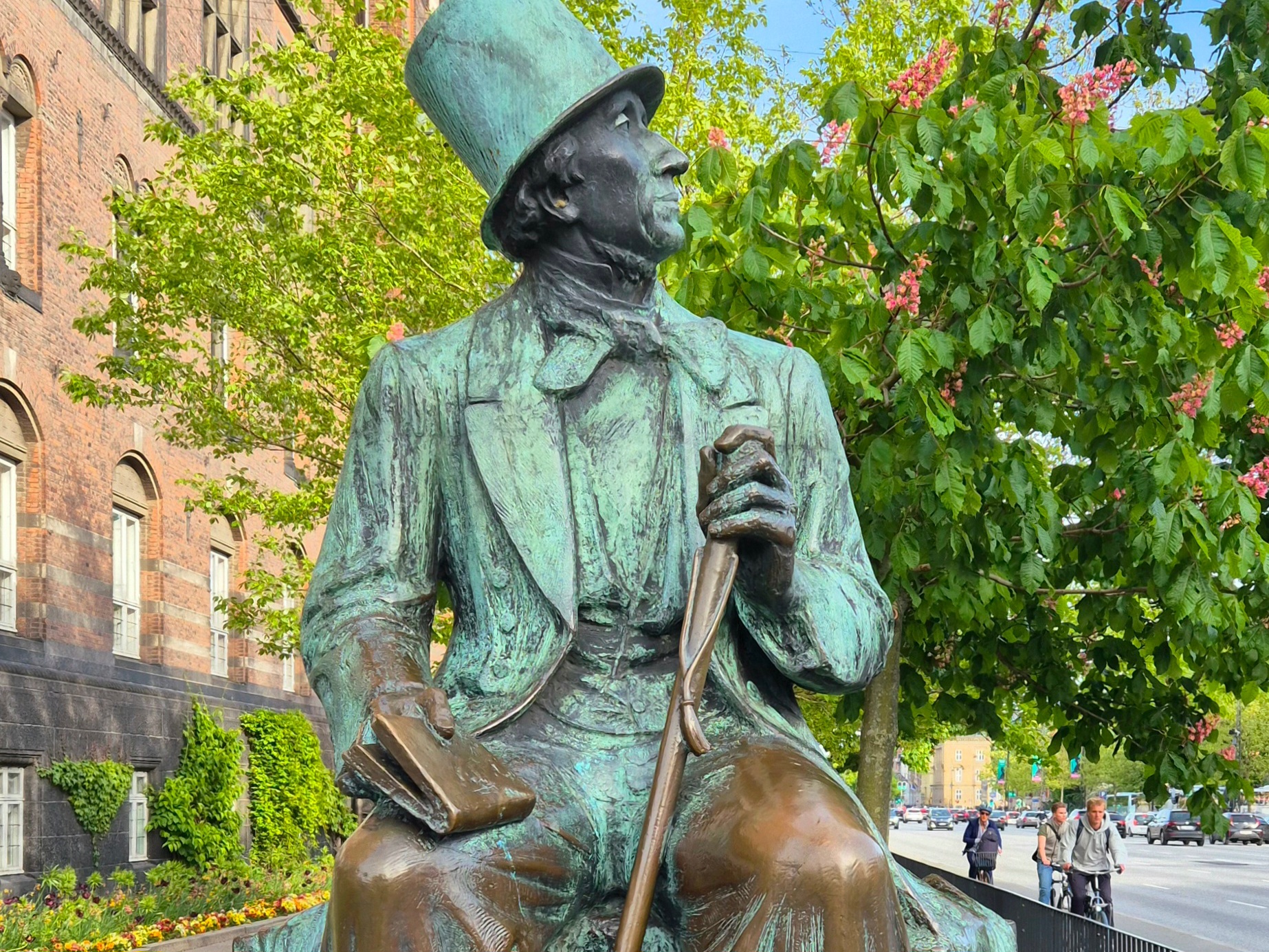 The grand one
The statue by City Hall
On H.C. Andersens Boulevard, facing the Tivoli gates he adored — top hat on, cane in hand, and a lap rubbed golden by decades of visitors climbing up to sit with him for a photo.
Find him here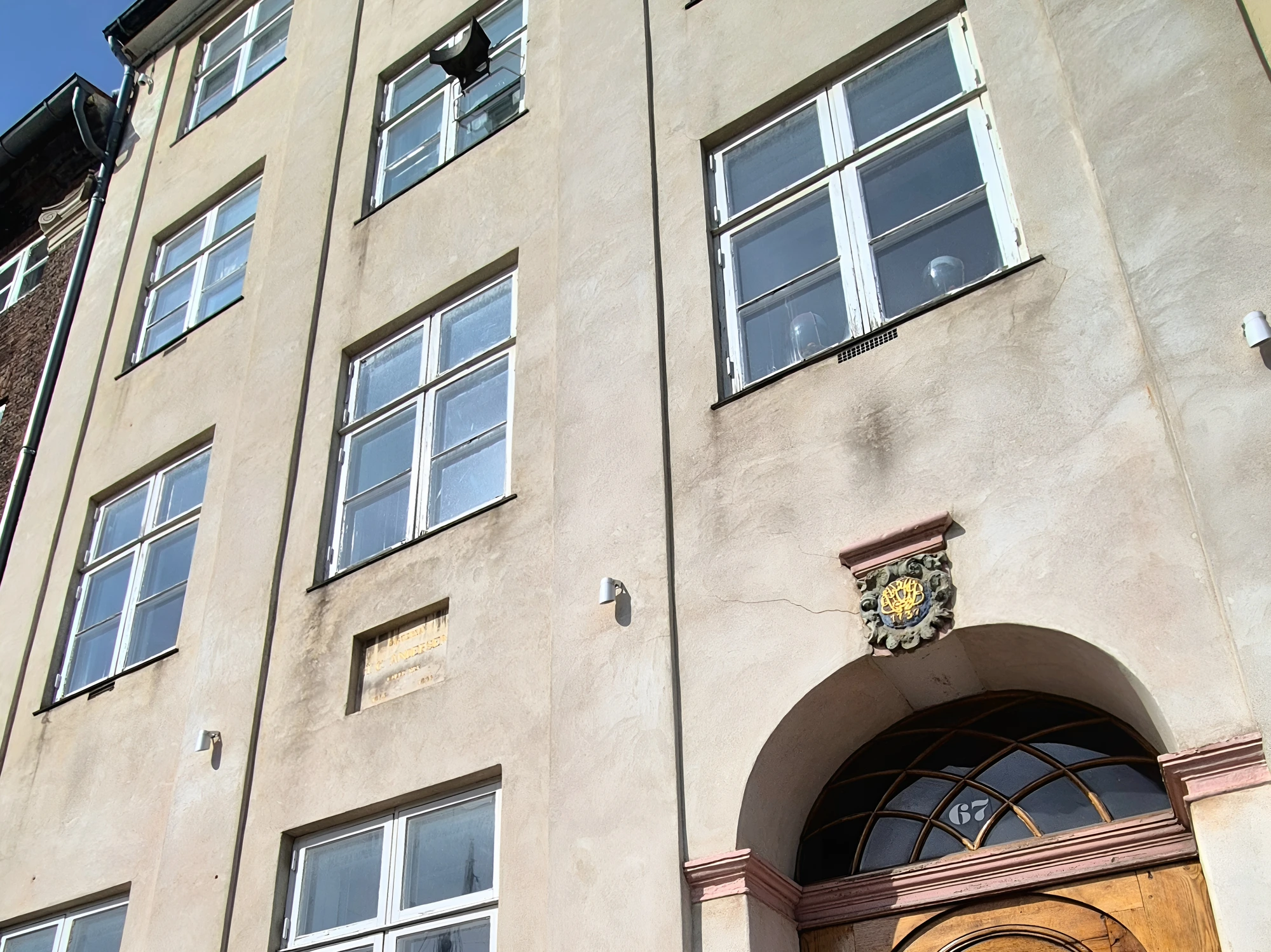 The long home
His home at Nyhavn 67
His longest stay (1848–65): three rooms on the second floor, lodging with the Anholm family on the sunny side of the canal. The memorial plaque by the arched wooden door marks it — and the harbour view hasn't changed much since.
Find him hereThe attic room at Magasin
Before Nyhavn came a year (1827–28) in a tiny attic room inside what is now the Magasin du Nord department store on Kongens Nytorv. The room is preserved, almost untouched for 200 years — ask the sales staff and they'll help you find your way up.
Find it here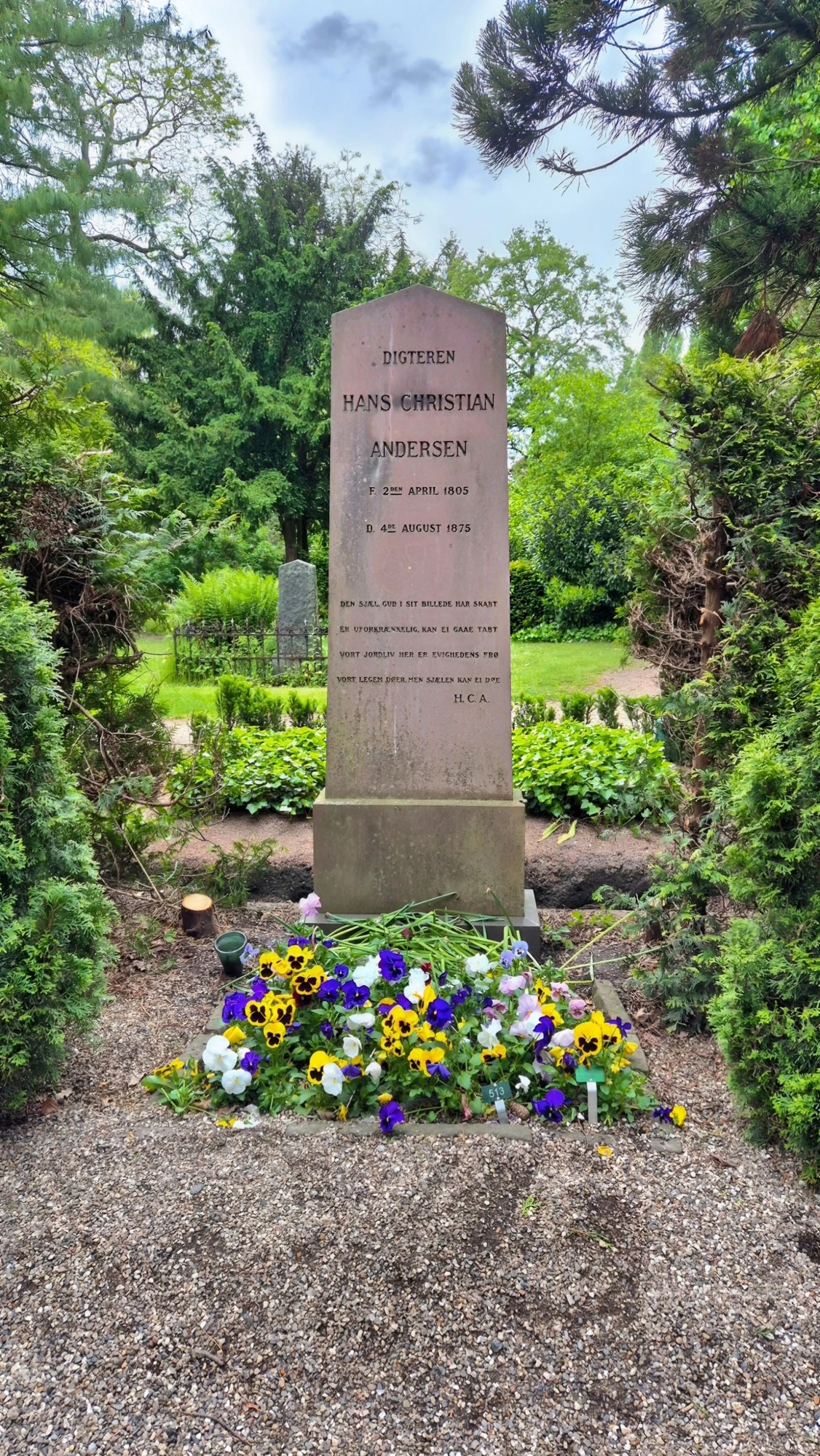 The Poet
His grave at Assistens Kirkegård
“Digteren — The Poet.” A simple stone under the trees in Nørrebro's beautiful park-cemetery, still dressed with fresh flowers. Locals picnic on the grass all around him.
Find him hereThe Little Mermaid
Not him — her. The heroine of his 1837 tale has sat on her rock at Langelinie since 1913, gazing back at the shore she gave everything up for. Small, shy and utterly unmissable. (No photo — images of the statue belong to the sculptor's family, so we keep our camera politely in our pocket.)
Find her here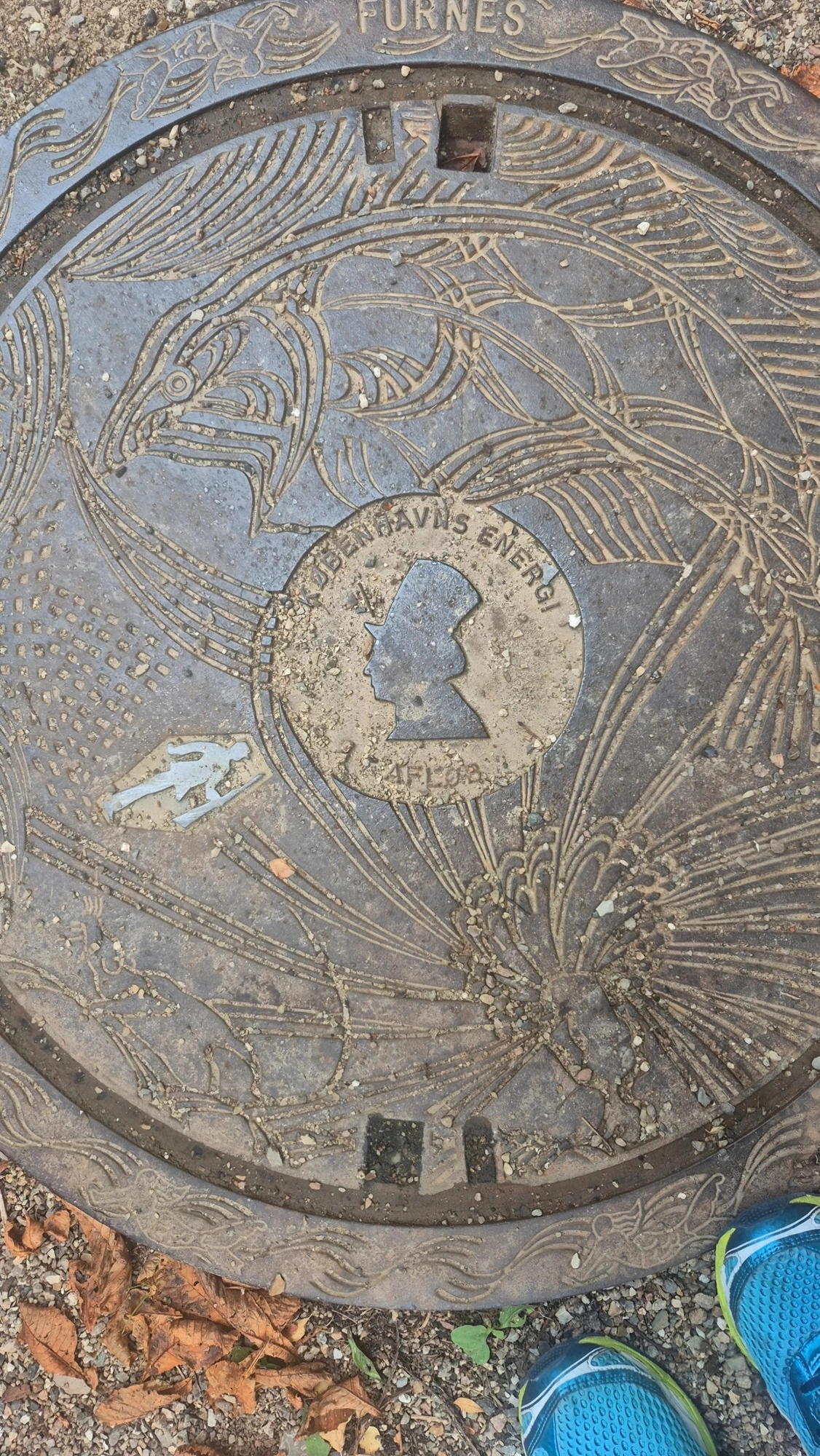 The hidden ones
The manhole covers
Look down. The old cast-iron covers from Københavns Energi carry his top-hatted profile — scattered at random spots all over the city. Spotting one is a tiny local treasure hunt.
Random locations — keep an eye on the pavement.
Where he lived
The Nyhavn years.
Three addresses on the postcard canal, two with memorial plaques, all private homes today, so admire them from the quay.
One correction to the postcards: he didn't die in Nyhavn. His last days were spent at Rolighed, the Melchior family's country house on Østerbro, where he died on 4 August 1875.
"To travel is to live."
H.C. Andersen — who wrote it about a life that began right here
Walk his city yourself.
The itinerary passes his Nyhavn houses and the Kongens Have statue — the planner can add the rest.
BOOK A TOUR
This is an ad · Powered by GetYourGuide
Found this useful?
Send it to whoever you're travelling with.